Auto Repair Shop Website Design: What Gets Customers Booking
What actually gets a stressed customer to book with your auto repair shop instead of the next Google result, and where most shop websites lose that trust.
Someone whose car just started making a noise it has never made before is not shopping calmly. They are searching from their phone, comparing two or three shops in a few minutes, and looking for the one that feels the most trustworthy right now. Your website is having that conversation whether you built it to or not.
Most auto repair shop websites were not built for this moment. They were built once, years ago, to have a presence online, and they have not been asked to do much since. That gap between what the customer needs and what the site delivers is where bookings are lost before the phone ever rings.
Why trust decides which shop gets the call
Car trouble puts people in an unusual position. They are being asked to hand a stranger their vehicle, often without the knowledge to judge the work themselves, and often on a timeline they did not choose. That combination makes trust the single deciding factor, more than price, more than location, in many cases.
A website earns that trust or spends it in the first few seconds. Visitors form a visual impression of a website within 50 milliseconds.[1] For a shop, that snap judgment is not about aesthetics. It is a stand-in for a much bigger question: does this business look like it knows what it is doing?
Where the trust actually gets built or lost
A handful of specific things determine whether that first impression turns into a booking.
- A clean, uncluttered layout. A homepage packed with every service, every certification logo, and three competing phone numbers signals disorganization, which reads as a proxy for how the shop runs its actual work. Simplicity is not a style choice here. It is reassurance.
- Service categories that are easy to scan. A customer trying to figure out if you handle brake work or diagnostics should not have to read paragraphs to find out. Clear categories, oil changes, brakes, diagnostics, tires, let a visitor confirm you do what they need in seconds.
- Visible credentials and reviews. Certifications, years in operation, and genuine customer reviews need to sit where a first-time visitor will actually see them, not several scrolls down. A shop with real trust signals and no way to show them is losing an advantage it already earned.
- A phone number that works with one tap. On mobile, a phone number should open the dialer directly. A visitor who has to copy a number, switch apps, and paste it has been given three extra chances to give up and call someone else.
Why the mobile experience decides more than the desktop one does
Over 60% of Google searches now happen on mobile devices,[2] and someone dealing with a car problem is close to certain to be one of them. A site that was designed for a desktop screen and simply shrinks down on a phone tends to bury the two things that matter most in that moment: what you do, and how to reach you.
Speed compounds the problem. As page load time increases from one second to three seconds, the likelihood of a visitor leaving rises by 32%.[3] A shop with excellent service and a slow website is losing customers who never see any of it.
What this looks like when it comes together
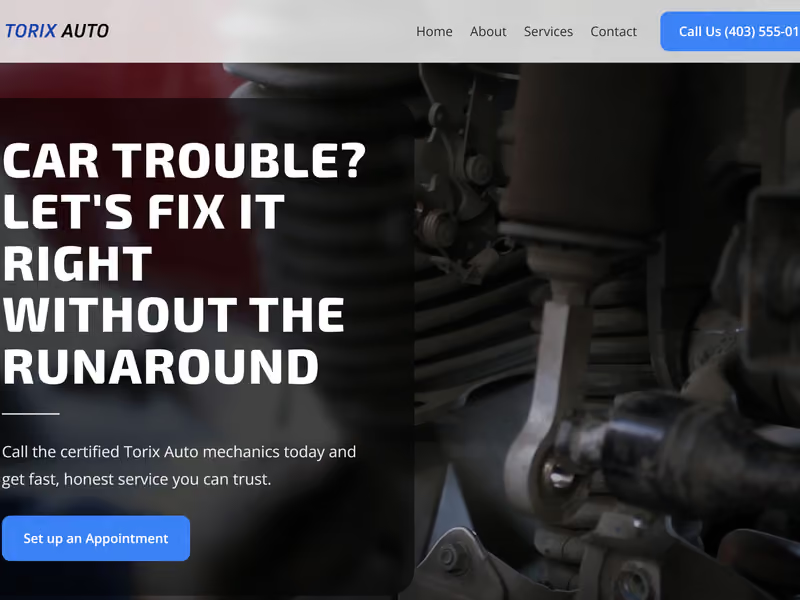
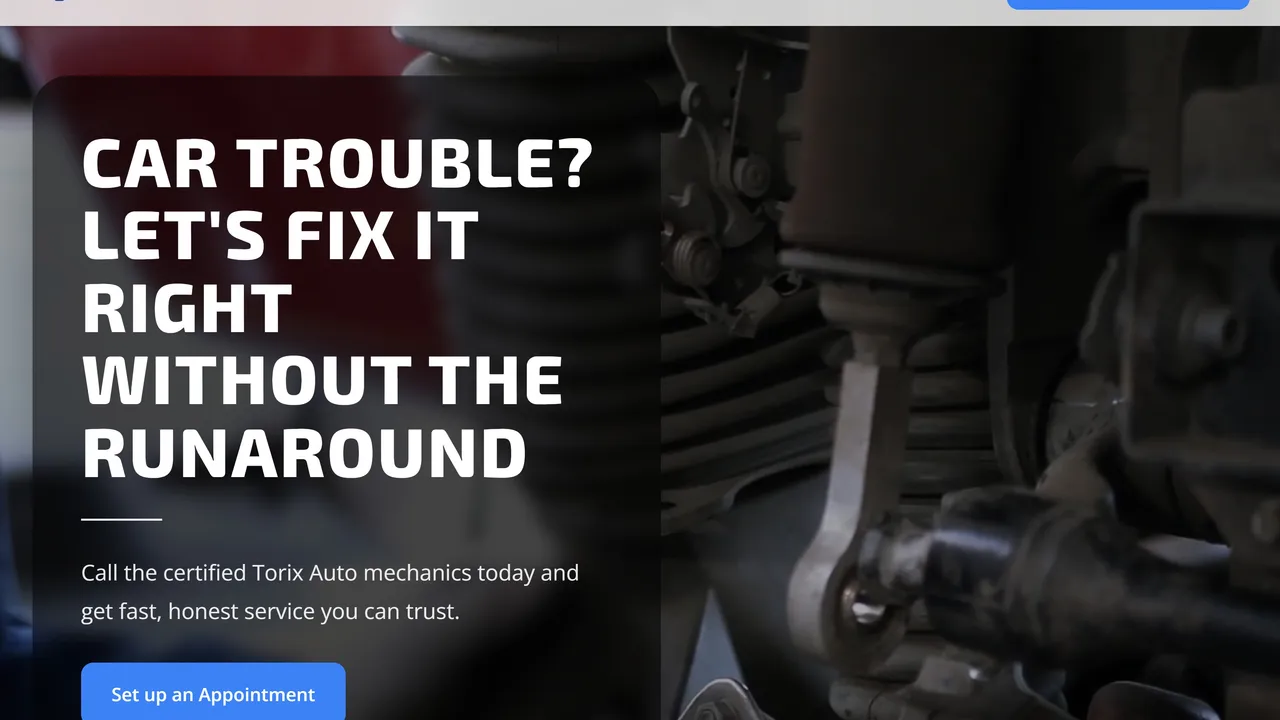
We built a concept project, Torix Auto, specifically to show how these pieces work as a system rather than as separate checklist items. The site uses a mobile-first layout, scannable service categories, and trust-focused copy designed to reassure a customer before they have decided to call. It is a design study, not a live client engagement, but the reasoning behind it is exactly what we apply to real auto shop projects: performance and structure supporting the same goal, making it easy for the right customer to feel comfortable reaching out.
Our automotive web design page covers the fuller scope of what we build into these sites, including the local SEO foundations that connect the design work to search visibility.
Common mistakes that quietly cost auto shops bookings
Most underperforming auto shop websites share a small set of recurring problems.
- Burying the phone number. If a visitor has to hunt for how to reach you, many will not bother. The number should be visible in the header on every page, not just the contact page.
- Leading with generic stock photography. A wrench and a smiling actor in a clean uniform do not build trust the way real shop photos, real staff, or a real bay do. Authenticity reads faster than polish.
- No mobile optimization. A desktop-first site that becomes cramped and hard to tap on a phone loses the majority of its actual traffic, since most searches happen there.
- Listing services without explaining them. “Diagnostics” means little to someone unsure what is wrong with their car. A sentence explaining what the service covers and when it is needed does more to build confidence than the service name alone.
- No local SEO foundation. A shop that never shows up for “auto repair near me” or “mechanic [city]” is invisible to exactly the customers most ready to book. Structured data, location-aware copy, and a well-maintained Google Business Profile all feed into this.
For the broader principles behind all of this, our complete guide to web design for service businesses covers the strategy that applies across every service industry, not just automotive.
Frequently asked questions
Does my auto shop need online booking, or is a phone number enough?
A phone number is the minimum, and for many shops it remains the primary contact method, especially for diagnostics where the customer needs to describe a problem before scheduling. Online booking is a genuine convenience add-on for routine services like oil changes or tire swaps, but it should support the phone number, not replace it as the primary path.
How long does it typically take to build an auto repair shop website?
Timelines vary with scope, but a focused site of five to six pages, home, services, about, contact, and booking, is a common structure for an auto shop and does not require a lengthy build. The bigger variable is usually how quickly content, photos, and service descriptions are provided, since those inputs shape the schedule more than the build itself.
What’s the difference between my Google Business Profile and my website for an auto shop?
They do different jobs. A Google Business Profile shows your hours, location, and reviews, and is often what a customer sees first in local search results. Your website is where you explain your services in detail, show real work, and give a customer a reason to trust you enough to call. A strong shop presence needs both working together, not one instead of the other.
What does a website like this typically cost?
Pricing depends on scope, the number of pages, and whether copywriting and photography are included. Our web design pricing page outlines how projects are typically structured, and a discovery call is the fastest way to get a specific number for your shop.
A stressed customer with a car problem is deciding, in seconds, whether your shop looks like the right place to trust. The websites that win that decision are not the flashiest ones. They are the ones that get out of the way and let trust, clarity, and speed do their job.
If your shop’s website is not doing that yet, our web design and development service covers how we approach automotive projects from the ground up, and our automotive industry page goes deeper on what we build in for shops specifically.