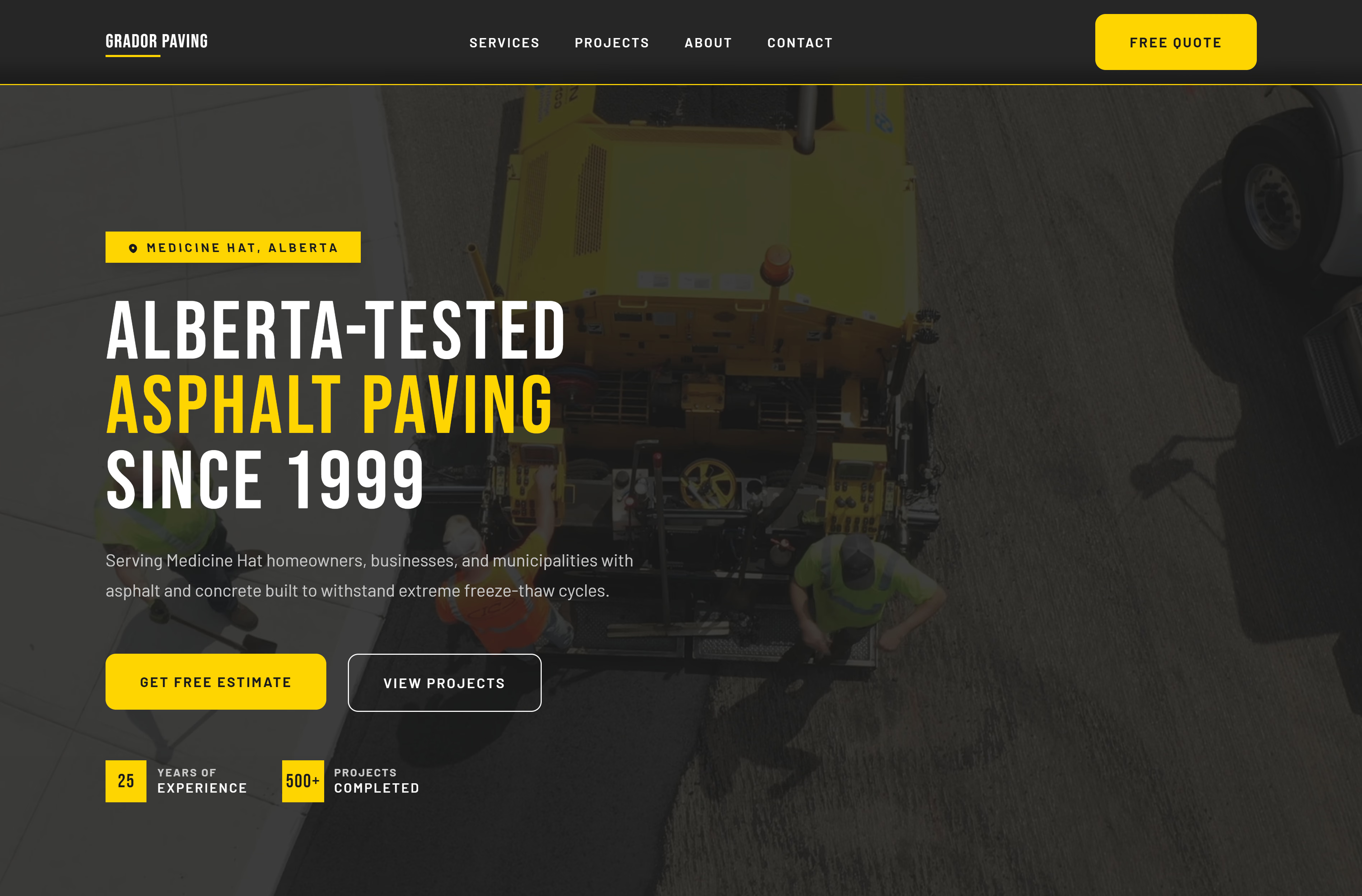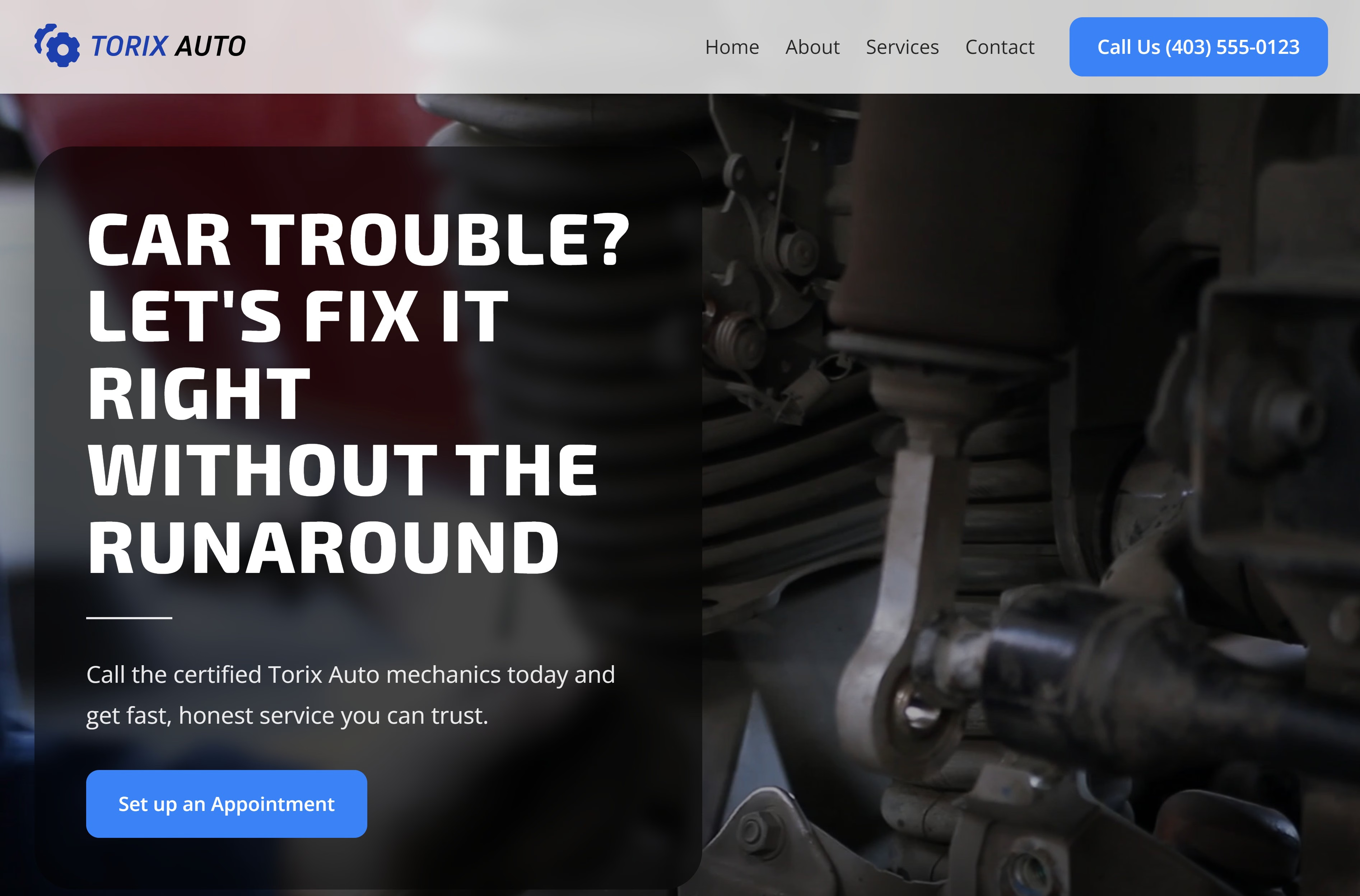
A service business website has one job: turn visitors into leads. Not impress them with design awards. Not demonstrate technical sophistication. Get someone who found you online to pick up the phone, fill in a form, or book an appointment.
Most service business websites fail at that job, not because they look bad, but because they were built without understanding how service buyers actually make decisions.
This guide covers everything you need to know: what a service business website genuinely needs, what the common mistakes are, how to choose your approach, and when professional help is worth the cost.
What Makes Web Design Different for Service Businesses
Service businesses are not e-commerce stores. You are not asking someone to add a product to a cart. You are asking them to trust a person with their home, their health, their money, or their vehicle, often before they have met you.
That changes everything about how a website should be built.
A product page has to overcome uncertainty about whether an item is the right one. A service business website has to overcome uncertainty about whether you, specifically, are trustworthy, competent, and worth what you charge. Visitors are not comparing specifications. They are asking: “Is this the kind of business I want to hire?”
The design choices that follow from this are different from a retail site. You need social proof early and prominently. You need the contact step to be frictionless. You need to be clear about what you do and who you serve, fast, because most visitors decide whether to stay or leave within a few seconds.
The Five Things Every Service Business Website Needs
These are not nice-to-haves. They are the minimum required for a service business website to generate leads consistently.
-
A clear, specific headline on the homepage. The moment someone lands on your site, they should be able to answer three questions without scrolling: what you do, where you do it, and who you do it for. “Calgary’s trusted plumbing experts” is not a headline. “Emergency plumbing repair and installation for Calgary homeowners” is. The second version tells someone immediately whether they are in the right place.
-
A fast, visible path to contact. The primary action on a service business site is almost always a phone call, a form submission, or a booking. That action should be one tap or click away from anywhere on the site. A phone number buried in the footer, or a contact page that requires six fields plus a CAPTCHA, are among the most reliable ways to lose leads your SEO already won.
-
Real proof that you do what you say. Testimonials, case studies, before-and-after photos, specific past projects. The more specific the proof, the more it converts. “John was great and I’d recommend him to anyone” is worth less than a testimonial that names the specific problem solved and the outcome. Your portfolio is not decoration; it is the primary evidence that you are who you say you are.
-
Clarity about your service area and speciality. If you serve Calgary and surrounding areas, say that. If you work primarily with residential clients, or commercial, or a specific industry, say that. Visitors who are not sure whether you serve them will not ask. They will leave. Specificity filters out poor-fit leads while helping the right ones feel found.
-
A site that loads quickly and works on a phone. More than half of local search traffic comes from mobile devices. A site that is slow to load or hard to navigate on a phone is not just an inconvenience; it directly reduces how many people contact you. Google’s research on mobile page speed shows that as load time increases from one second to three, the probability of a bounce rises sharply. On a service site, each of those bounces is a potential lead lost.
What a Website Can and Cannot Do for Your Business
A better website removes the friction that loses leads, but it cannot manufacture demand that is not there. If people are already searching for what you do in your area, web design decides how many of those searchers contact you. If very few people are searching yet, the website needs to run alongside something that builds awareness, such as local SEO, Google Ads, or referral partnerships.
This distinction matters because business owners often expect a redesign to solve a traffic problem when the actual issue is visibility. If your site is getting 50 visitors a month and converting 2% of them, a redesign to 4% conversion gives you two extra leads a month. That is real, but limited. Pairing good conversion design with a local SEO strategy that grows your traffic is where the significant growth comes from.
How to Choose Between a Custom Site and a Website Builder
For most service businesses starting out, a well-configured website builder is a reasonable starting point. For a business where the website is genuinely producing leads, a custom site usually earns its cost.
The honest tradeoff: builders like Wix and Squarespace are faster and cheaper to launch, and for a simple five-page service site, they work. The limitations show up when you need to fix specific conversion problems. Templates make it difficult to change the things that actually matter, like the flow from the homepage to the contact step, the placement of trust signals, or the performance on mobile. You end up working around the template rather than building exactly what your customers need.
A custom-built site costs more upfront and takes longer. The return on that investment depends on how much lead volume the site drives. A business billing $500,000 a year where the website is the primary source of new clients has a very different calculation than a solo operator with a full schedule and word-of-mouth referrals.
The full comparison of custom websites versus website builders for service businesses covers this in detail.
What are the most common web design mistakes that cost service businesses leads?
The problems that show up most consistently on service business websites are not exotic. They are the same few things, over and over.
Treating the homepage as a brochure. A homepage that leads with your company story, your values, and a paragraph about how long you have been in business is a brochure, not a lead-generation page. Visitors do not arrive to learn about your history. They arrive with a problem. Lead with the problem and the solution; earn the right to your story once they trust you enough to keep reading.
No clear primary call to action. If a visitor could reasonably ask “what am I supposed to do here?”, the page has too many competing options or none at all. Every page needs a primary action. On a service business site, that is usually “call us,” “get a quote,” or “book a consultation.” Make it the most visually distinct element on the screen.
Generic claims with no substance. “Quality workmanship,” “exceptional service,” “trusted professionals” do not differentiate you from any other business in your category. Every competitor says the same thing. The alternative is specificity: a specific project outcome, a real customer result, the exact steps you take, the specific materials or approach you use. Specifics convert. Adjectives do not.
Making the contact step too hard. The moment someone decides to reach out, any unnecessary friction can lose them. A contact form with more than four or five fields is too long for most service inquiries. A phone number that is not clickable on mobile means the visitor has to memorize or copy the number. These are small things with real costs.
Not addressing common objections. Service buyers often have the same questions before they hire: how much does it cost, how long does it take, what is included, do you serve my area, are you licensed and insured. If your website does not answer these questions, some visitors will leave to find a competitor who does. An FAQ section on the relevant service page is one of the most practical ways to pre-answer these.
How do you know when your website needs to be rebuilt?
Not every website needs a complete rebuild. Updating copy, adding testimonials, or improving the contact page sometimes produces meaningful results. But some websites are built on a foundation that makes improvement difficult.
The clearest signs that a rebuild makes more sense than patching: the site is not mobile-friendly and fixing it would require restructuring every page, the underlying platform or template makes performance improvements structurally impossible, the information architecture is confusing in a way that cannot be fixed by editing individual pages, or the design is so far behind current expectations that it damages trust before a visitor reads a word.
A useful signal: show your site to someone who does not know your business and ask them to tell you what you do and how to contact you. If that takes more than a few seconds, or produces a wrong answer, the problem is structural, not cosmetic.
How much does a service business website cost in Canada?
The honest answer is that cost varies significantly based on what the site needs to do, how it is built, and who builds it.
A template-based site built on a website builder can cost a few hundred dollars to launch, with monthly subscription fees of roughly $20 to $50. A professionally designed and built custom site for a service business in Canada typically starts in the range of a few thousand dollars and rises based on the number of pages, custom features, and the scope of the conversion work involved.
The calculation that matters is not the upfront cost in isolation, but the cost relative to what the site produces. A $5,000 website that generates two additional qualified leads per month, at an average job value of $1,500, pays for itself in the first year and delivers return on investment indefinitely after that. A $500 template that generates no additional leads is not the cheaper option over time.
What Good Web Design Process Looks Like
The process behind a well-built service business website is not primarily about aesthetics. It is about understanding how a specific business’s customers find and evaluate them, then building a site that meets those customers where they are and makes it easy to take the next step.
In practical terms, that means starting with the customer journey: what is someone searching for when they find this business, what questions do they have, what makes them choose one provider over another, and where in that process does the contact happen. Design decisions follow from those answers.
It also means building with performance as a constraint, not an afterthought. A beautiful site that loads slowly on a phone in a low-signal area loses the customers it was designed to capture. Speed is part of the design, not a separate technical concern.
After launch, a good process includes measuring what actually happens: which pages visitors land on, where they leave, how many complete the contact step. The first version of a site is rarely the best version. Iteration based on real behaviour is how conversion improves over time, which is why our conversion optimization service exists alongside web design.
Local SEO and Web Design Work Together
A service business website and local search visibility are two sides of the same coin. The website handles the conversion when someone finds you. Local SEO handles whether they find you at all.
The connection goes in both directions. A well-built website sends clearer signals to Google about who you are, where you operate, and what you do, which supports local rankings. Specific technical choices, like schema markup that tells Google your business address, phone number, and service area, reinforce your Google Business Profile and help you show up in the map results that appear above the regular search listings.
The practical implication: if your goal is more leads from local search, web design and local SEO should be planned together rather than in sequence. A redesign that ignores local SEO considerations can actually disrupt existing rankings, while a local SEO effort directed at a website with serious conversion problems captures traffic that then fails to produce leads.
What should you look for when hiring a web designer for your service business?
Not every web designer understands service businesses. Someone who primarily builds portfolio sites for artists or e-commerce stores for retailers has different instincts than someone who focuses on lead generation for local service providers.
When evaluating a designer or agency, the most useful questions are about outcomes, not process. Can they show you work they have done for similar businesses, and can they speak to what those sites produced? Do they ask about your customers, your sales process, and how you currently get new business, or do they jump immediately to aesthetics and platform choices? Do they understand the relationship between web design and local search, or do they treat those as separate problems?
The portfolio is the most honest evidence. A designer who can show you a service business site that is clearly built to generate leads, with real contact calls to action, specific trust signals, and good mobile performance, understands what the work actually requires. Our own web design work for service businesses is built around these principles, and you can see examples in our portfolio.
For a closer look at how these principles apply to specific trades, auto repair shop website design and contractor website design cover the industry-specific details that a general guide like this one cannot.
Frequently Asked Questions
How long does it take to build a service business website?
A professionally built custom service business site typically takes two to six weeks from kickoff to launch, depending on the scope and how quickly content and feedback are provided. The main variables are the number of pages, whether photography needs to happen, and the back-and-forth on content revisions. Simpler, template-based builds can be faster, sometimes closer to a week, but the timeline still depends on content being ready.
Do I need to redesign my whole site, or can I just update parts of it?
It depends on what is causing the problem. If your site has a structural issue, such as a confusing navigation, a contact flow that requires too many steps, or a template that cannot perform well on mobile, a full rebuild is often more effective than patching individual pages. If the site is technically sound but the copy is outdated or trust signals are missing, targeted updates to specific pages can produce real improvements without a full redesign. A website audit is usually the fastest way to figure out which situation you are in. Our post on website redesign checklists for service businesses covers how to assess what your site actually needs.
Should I build my own website or hire someone?
Building your own site is realistic if you have time to learn the platform, the site is genuinely simple (a few service pages and a contact form), and your business is not primarily dependent on inbound leads from the website. If the website is supposed to be a significant source of new clients, the cost of a professional designer is typically recovered in the difference between a site that converts well and one that does not. The question to ask is not “can I build this?” but “what is the cost of a site that underperforms?”
How do I know if my current website is actually a problem?
If you are getting traffic but not leads, that is usually a conversion problem the design can solve. If you are getting very little traffic, that is usually a visibility or SEO problem that web design alone will not fix. Google Search Console shows you how many people are finding your site from search. If the site is getting reasonable impressions but very few clicks, the title and description may need work. If people click but do not contact you, the site itself is the issue. Our post on why service business websites get traffic but no leads walks through how to diagnose this.
What is the difference between web design and web development?
Web design refers to the visual and user experience decisions: layout, colour, typography, content hierarchy, and how the page guides a visitor toward the action you want them to take. Web development refers to the technical implementation: writing the code, building the templates, setting up the hosting and performance infrastructure. Most professional web design projects include both. For a service business, the design decisions tend to matter more than the technology choice, because the technology exists to serve the design, not the other way around.
The goal of every service business website is the same: help someone who needs what you offer understand quickly that you can help them, trust that you will do it well, and take the first step toward hiring you. That is a design problem, a content problem, and a performance problem all at once.
If you want to understand where your current site stands, request a free website audit and we will show you what we find.
If you are based in Calgary or Alberta, our Calgary web design page covers the local context, our work, and how we approach projects for service businesses in the market.