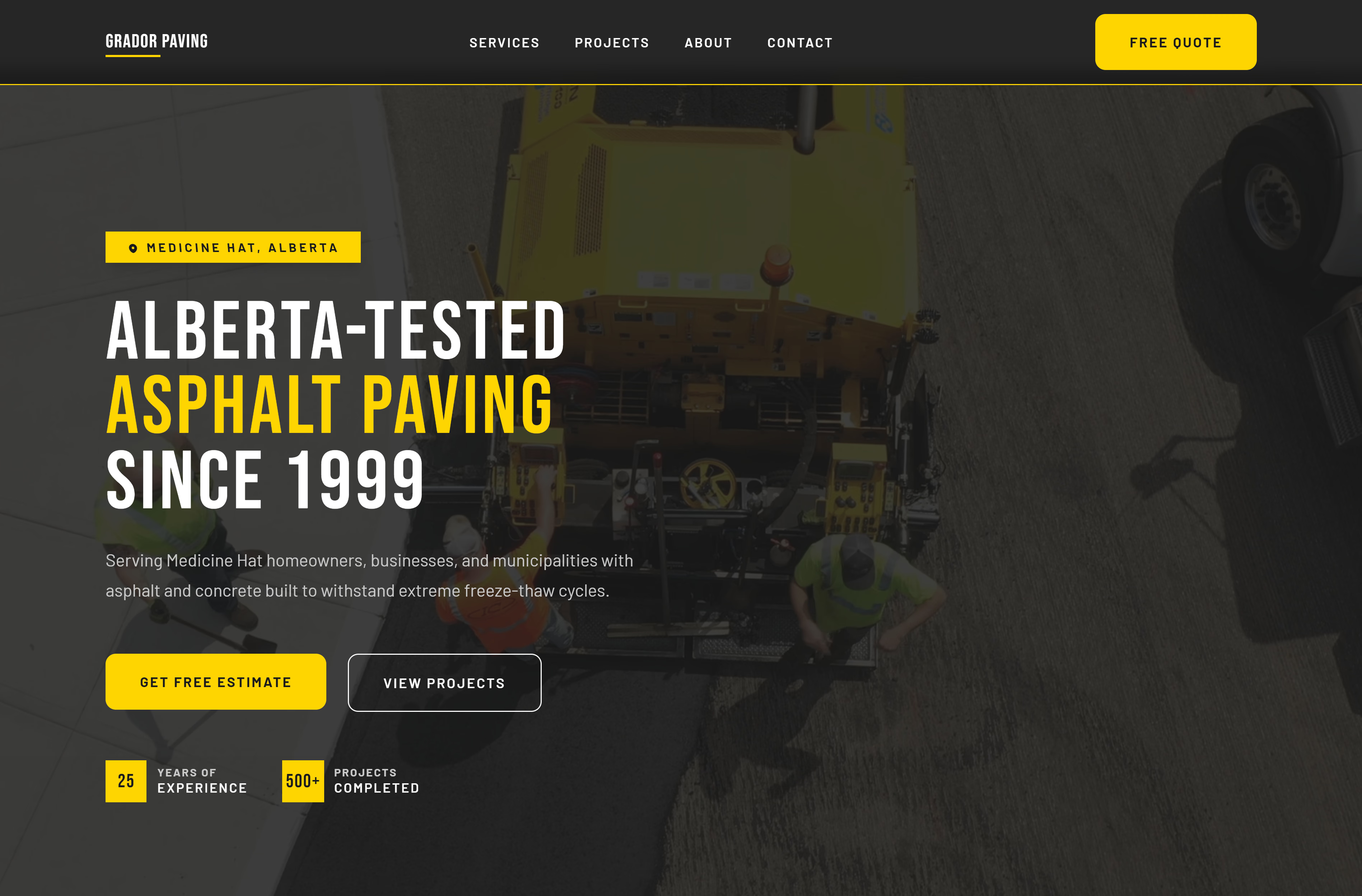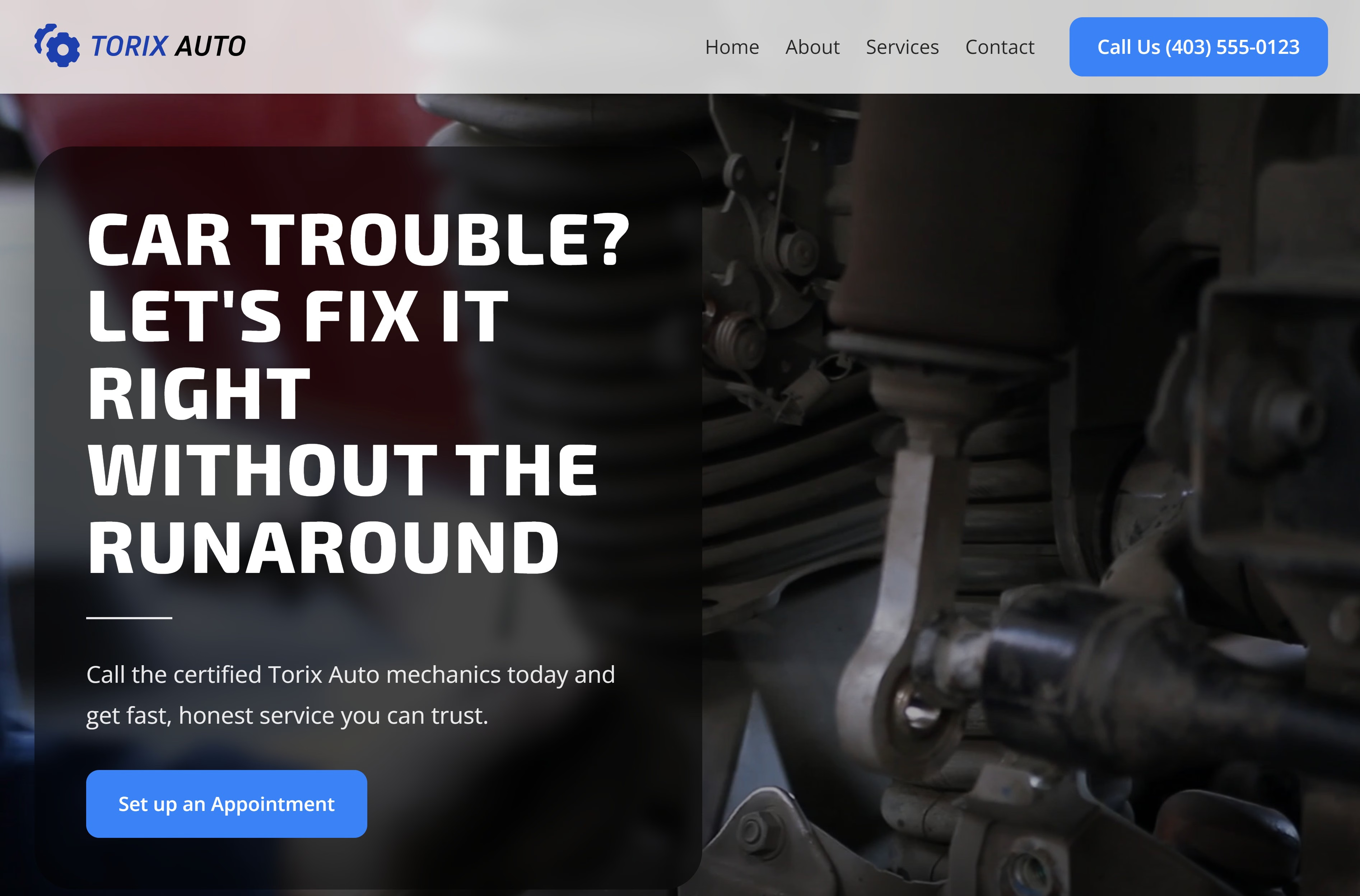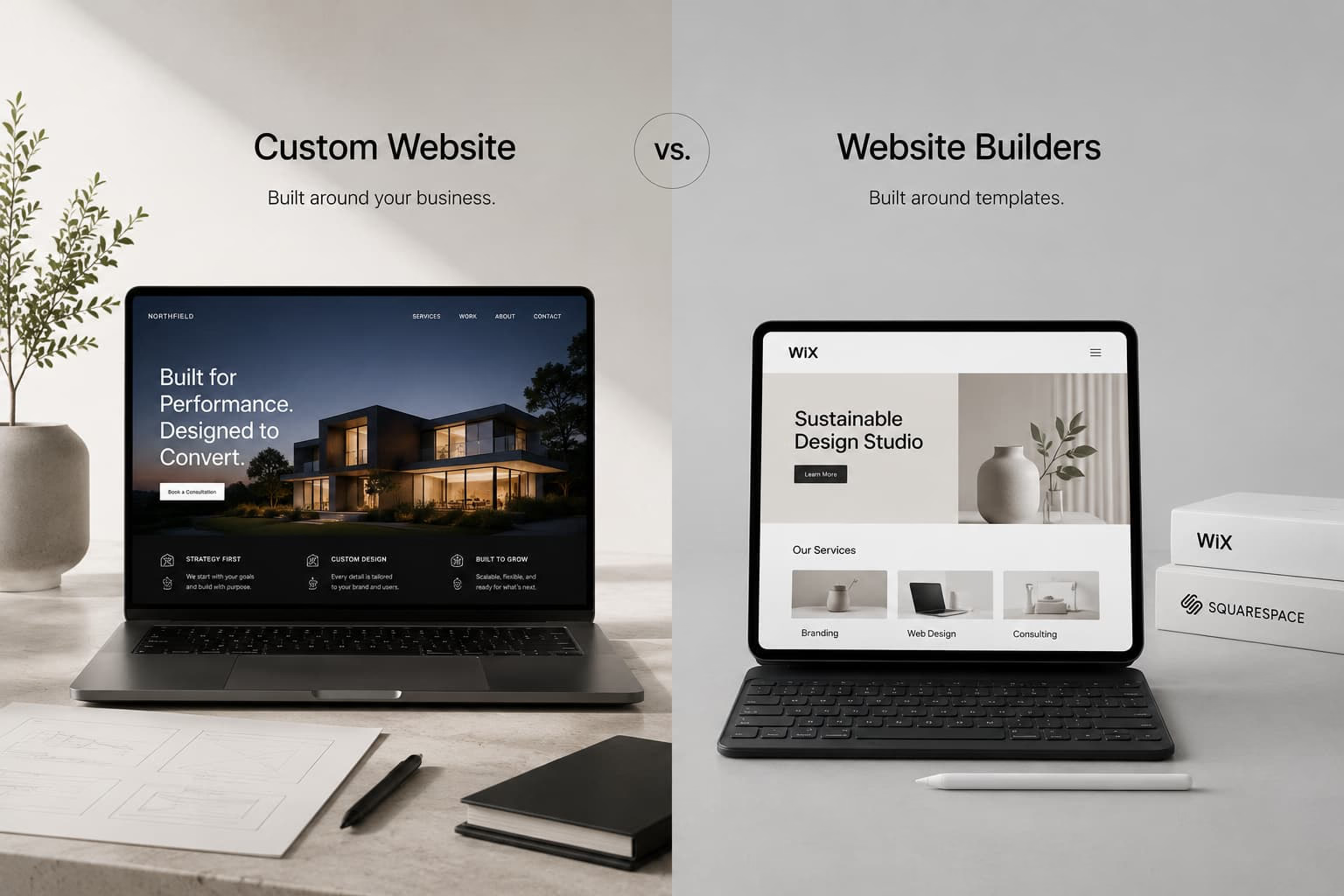
Most Service Businesses Don’t Need the Same Type of Website
If you’re planning a new website, one of the first decisions you’ll face is whether to build a custom website or use a platform like Wix or Squarespace. The answer depends less on the technology and more on what role the website plays in your business.
For some businesses, a website is simply a digital business card: it helps people find a phone number, view services, and confirm the business is legitimate. For others, the website is a lead-generation tool that needs to rank in search, guide visitors toward action, integrate with business systems, and support growth over several years. Those are very different requirements.
A custom website is not automatically better. Wix and Squarespace are not automatically worse. Each option solves a different problem, and the right choice depends on where your business is today and where you expect it to be a year from now.
What Is a Custom Website?
A custom website is built specifically for your business rather than assembled from a pre-built template.
That doesn’t necessarily mean everything is built from scratch. Modern custom websites often use frameworks, design systems, and proven development tools. The difference is that the design, structure, content strategy, and functionality are tailored to your business rather than constrained by a website builder’s template system.
For a service business, a custom website can be designed around:
- Your sales process. Every page can support how customers actually move from awareness to inquiry.
- Your services. The structure can be organized around the way customers search for and evaluate your offerings.
- Your growth plans. New service pages, landing pages, location pages, integrations, and marketing campaigns can be added without fighting platform limitations.
- Your performance goals. Speed, accessibility, technical SEO, and conversion optimization can be prioritized from the beginning.
The result is a website built around the business instead of forcing the business into a predefined template.
What Are Wix and Squarespace?
Wix and Squarespace are website builders designed to make launching a website fast and accessible.
They provide hosting, templates, page builders, security updates, and content management tools in a single platform.
For many businesses, that’s a legitimate advantage. A business owner can launch a professional-looking website in days instead of weeks, and often at a lower upfront cost. The tradeoff is flexibility: website builders are designed to work for millions of businesses at once, so they prioritize simplicity over customization. For many businesses, that’s perfectly acceptable. For others, it becomes a limitation as the business grows.
Custom Website vs. Wix vs. Squarespace
Cost
Website builders usually win on upfront cost. A Wix or Squarespace site can often be launched for a monthly subscription plus the time required to create content and configure pages. A custom website typically requires a larger initial investment because design, development, content structure, and optimization work are performed specifically for your business.
The important question isn’t which costs less today, but whether the website will need to be rebuilt in a year because it can no longer support the business. A lower upfront cost can become more expensive if it delays growth or requires a full replacement later.
For a deeper breakdown of pricing considerations, see our guide on website costs in Canada.
Design Flexibility
Custom websites provide significantly more flexibility. With a custom build, every layout, page structure, conversion path, and design decision can be tailored to the business. Website builders offer customization too, but within predefined boundaries. Those boundaries may never matter if your needs are simple, but they become more noticeable when you want:
- Unique layouts. Custom designs that don’t resemble common templates.
- Specialized functionality. Booking systems, calculators, customer portals, or complex integrations.
- Advanced user journeys. Different paths for different services, audiences, or campaigns.
- Conversion-focused layouts. Pages optimized around how visitors become leads rather than how a template is structured.
For service businesses competing in crowded markets, these differences can matter.
SEO Potential
Both custom websites and website builders can rank in search results. The idea that Google automatically dislikes Wix or Squarespace is outdated. The more relevant question is how much control you have over the technical and structural elements that affect rankings.
A custom website typically provides complete control over:
- Technical SEO. Site architecture, schema markup, metadata, page performance, and crawlability.
- Content structure. Service pages, industry pages, content clusters, and internal linking systems.
- Performance optimization. Faster loading pages and better Core Web Vitals.
- Future expansion. Adding content and SEO-focused pages without platform constraints.
Wix and Squarespace provide many SEO tools, but the level of flexibility is lower. For businesses that rely heavily on organic search, that difference often becomes more important over time.
Performance and Page Speed
Page speed affects both user experience and conversions. When someone needs an electrician, physiotherapist, lawyer, or roofing contractor, they don’t want to wait for a slow website.
Custom websites generally offer more opportunities to optimize performance because every asset, layout, and feature can be controlled directly. Website builders often include additional scripts and platform features that cannot be fully removed. That doesn’t mean every custom website is fast or every Wix site is slow, but custom builds give developers more control over performance optimization. As traffic grows, that control becomes increasingly valuable.
When is Wix or Squarespace the right choice for your business?
Website builders are often the right choice when:
- You need a website quickly. Launch speed matters more than customization.
- Your budget is limited. A lower upfront investment is the highest priority.
- Your website is primarily informational. The site functions more like a brochure than a lead-generation system.
- You have simple requirements. Basic service pages, contact forms, and company information are sufficient.
- You prefer a DIY approach. You want to manage design and content changes yourself.
There is nothing wrong with choosing Wix or Squarespace when those conditions match your situation.
In fact, launching a simple website is usually better than delaying for months while waiting for the perfect one.
When is a custom website worth the investment?
A custom website becomes more compelling when:
- The website generates leads. The site directly contributes to revenue and growth.
- SEO is important. Organic search is a significant customer acquisition channel.
- You offer multiple services. Different audiences need different information and conversion paths.
- You want a competitive advantage. Standing out matters in your market.
- You expect growth. Future expansion is part of the plan.
For many service businesses, the turning point happens when the website stops being an online brochure and becomes part of the sales process.
At that stage, customization, performance, and flexibility often produce a meaningful return.
A Common Middle Ground
Many businesses start with a website builder and move to a custom website later. That can be a perfectly reasonable path. The key is recognizing when the current platform is becoming a bottleneck.
Some common signs include:
- You can’t create the pages you need. The platform limits layouts or functionality.
- Your SEO strategy has outgrown the site structure. Adding content and service pages becomes difficult.
- Performance issues are affecting user experience. The site feels slow despite optimization efforts.
- Your competitors are creating a stronger online experience. Their websites better support lead generation and trust.
- The website no longer reflects the business. The company has evolved but the site hasn’t.
When those signs appear, the conversation shifts from “How can we improve this website?” to “Do we need a better foundation?”
Which Option Is Right for Your Service Business?
If your goal is simply to establish an online presence, Wix or Squarespace may be all you need. If your goal is to generate leads, compete in search results, improve conversion rates, and build a long-term marketing asset, a custom website often becomes the better investment.
Neither option is universally right. The right choice depends on your budget, goals, timeline, and growth plans. The important thing is choosing the option that fits the business you’re building, not just the business you have today.
Frequently Asked Questions
Is Wix good enough for a small business website?
Yes. For many small businesses, Wix provides enough functionality to launch a professional website. The question is whether it will continue meeting your needs as your marketing and lead-generation efforts grow.
Can a Wix website rank on Google?
Yes. Wix websites can rank in Google search results. Rankings depend on many factors, including content quality, competition, website structure, backlinks, and SEO implementation.
Is Squarespace better than Wix?
Neither platform is universally better. Squarespace is often preferred for design simplicity and visual presentation, while Wix offers more customization options. The better choice depends on your priorities.
Why are custom websites more expensive?
A custom website involves strategy, design, development, performance optimization, content structure, and conversion planning tailored to a specific business. The additional work creates flexibility and long-term scalability.
How do I know if my business has outgrown a website builder?
If your website is generating leads, your SEO strategy is expanding, or platform limitations are preventing growth, it may be time to consider a custom website.
The Bottom Line
A website builder is often the fastest way to get online. A custom website is often the better way to build a long-term business asset. The right choice comes down to how important your website is to the future of your business.
If you’re evaluating whether your current website is helping or limiting growth, explore our web design and development services or request a website audit. We’ll help you understand the tradeoffs and choose the approach that makes the most sense for your business.
For a complete guide to what makes a service business website work — from structure to trust signals to local SEO — see Web Design for Service Businesses: The Complete Guide.